
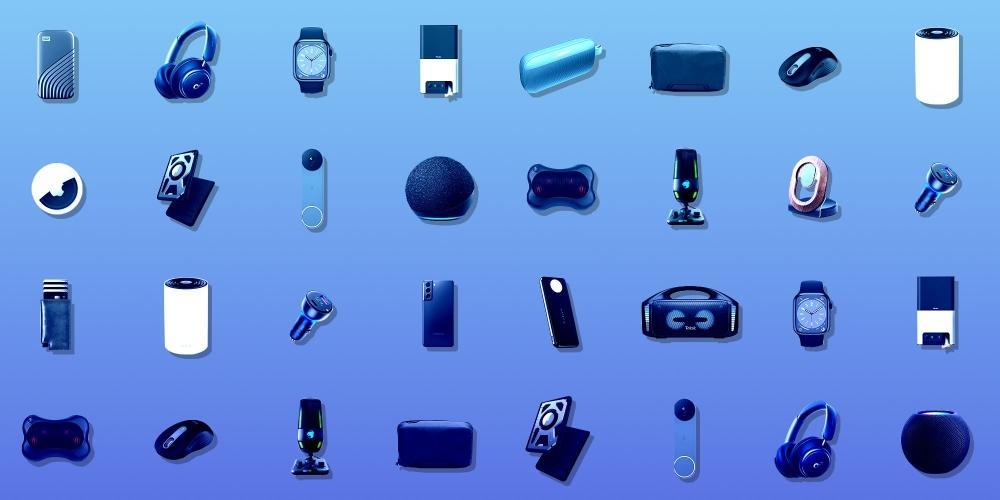
10 Devices To Make Your Everyday Life Better In Africa
The Definitive Guide To Life-Improving Technology For African Households | TechCM Electronics Store Africa | 2025–2026
Technology is no longer just for the wealthy, the technical, or the privileged. In 2025, the right device can save you hours of frustration, keep your home powered during load shedding, track your health in real time, transform your entertainment experience, and make the day-to-day rhythms of life in Africa — with all its unique rewards and challenges — simpler, smarter, and more enjoyable. Whether you live in a compact Nairobi apartment, a family home in Lagos, a suburban house in Johannesburg, a villa in Accra, or a city flat in Cairo — there are ten devices that the expert team at TechCM, Africa’s number one electronics store, believes every African household should consider owning in 2025 and 2026. Each one is backed by real data, chosen for its specific relevance to African conditions, and available at TechCM with secured payment and worldwide delivery across the continent.
Why These 10 Devices Matter Specifically In Africa
The devices on this list were not chosen by copy-pasting a global “best gadgets” list. They were chosen specifically because they address the real conditions of daily life across Africa — power interruptions, high ambient temperatures, mobile-first digital habits, a young and health-conscious population, strong social and entertainment culture, security considerations in urban environments, and the explosion of remote work and content creation that is reshaping African professional life. Each device solves a problem, enhances a daily routine, or unlocks a capability that makes life meaningfully better for Africans in Johannesburg, Lagos, Nairobi, Accra, Cairo, Kigali, Dar es Salaam, and every city and town in between. Every product on this list is available at TechCM, Africa’s number one electronics store, with secured payment and worldwide delivery.
The 10 Devices Every African Home Should Have
No device on this list is more uniquely and urgently relevant to African households than an Uninterruptible Power Supply — and it is therefore our number one recommendation without hesitation. Load shedding in South Africa has subjected households to scheduled blackouts of up to 12 hours per day in recent years. Power outages are a daily or weekly reality for households across Nigeria, Ghana, Tanzania, Zimbabwe, and Zambia. Voltage surges — the sudden spike of electrical power that occurs when grid power returns after an outage — destroy televisions, laptops, routers, refrigerators, and every other electronic device plugged into an unprotected socket in an instant. A UPS protects against both of these threats simultaneously: it provides a battery-backed power bridge that keeps connected devices running during an outage, and it includes automatic voltage regulation that absorbs surges before they reach your electronics.
The practical implications for African households are enormous. A UPS connected to your Wi-Fi router keeps your internet running during load shedding — critical for remote workers, students in online classes, and households that rely on internet-based communication. A UPS connected to your laptop means you can keep working through a blackout without data loss. A UPS protecting your smart TV and home entertainment system prevents the surge-related failures that destroy thousands of electronics across Africa every year. The APC Back-UPS 1100VA, Eaton 5S 1500VA, and Mecer 2000VA are among the most popular models at TechCM for South African and Nigerian households. For the price of a mid-range smartphone, a UPS can protect electronics worth many times its own cost — and pay for itself the first time it prevents a surge from destroying your television.
Best For: Every African household in South Africa, Nigeria, Ghana, Tanzania, Zimbabwe, Kenya, and beyond — particularly remote workers, students, and households with valuable electronics including laptops, smart TVs, and routers.
Africa receives more direct sunlight than almost any other inhabited region on Earth — an average of 6–8 peak sunlight hours per day across much of the continent, compared to 3–4 hours in Europe. This extraordinary solar resource, combined with the reality of frequent power interruptions across Africa, makes a high-capacity solar power bank one of the most practical, affordable, and distinctly African devices on this list. A good solar power bank serves multiple roles in an African household: as an emergency power source during load shedding or blackouts, as a travel companion on long inter-city bus or road journeys, as a practical outdoor companion for markets, construction sites, and field work, and as a reliable charger for smartphones, tablets, earbuds, and smartwatches wherever you are.
GearJunkie’s extensively tested 2025 power bank guide recommends the GOODaaa 36,000mAh Wireless Power Bank as the top high-capacity choice — delivering enough power to charge a smartphone 6 to 8 times on a single full charge, with six output ports including built-in cables, wireless charging, and a solar backup input option. For African users, the three-input design — USB-C, micro-USB, and solar panel — is especially valuable: you can charge it from your home socket when power is available, then use the solar panel to keep it topped up throughout the day from the abundant African sun. The BigBlue SolarPowa 28 tested by GearLab earned top marks for its balance of portability and charging efficiency in both direct and indirect sunlight conditions, with three USB outputs for charging multiple devices simultaneously. Always carry a power bank with a built-in LED flashlight — invaluable during night-time power outages across African cities.
Best For: Every African household and individual — especially students, outdoor workers, travellers, and anyone in areas with unreliable electricity in Nigeria, South Africa, Tanzania, Ghana, and across the continent.
In African urban households — from the thick-walled concrete houses of Lagos and Nairobi to the multi-storey family homes in Accra and Johannesburg — a single broadband router placed in one room simply cannot deliver reliable Wi-Fi to every corner of the home. Dead zones in bedrooms, weak signals in the kitchen, and intermittent drops in the home office are productivity killers for remote workers and frustrations for every other family member. A Wi-Fi mesh network solves this problem permanently by replacing a single router with a network of two or three nodes placed throughout the home, each broadcasting the same Wi-Fi network and seamlessly handing off devices as you move from room to room — exactly like the multi-room audio systems that use the same principle for music.
TP-Link Deco mesh systems — among the best-selling in Africa at TechCM — are particularly well regarded for their straightforward setup via the Deco app, strong performance in multi-floor buildings, and compatibility with all major African ISPs. The TP-Link Deco XE75 Pro supports Wi-Fi 6E — the latest wireless standard delivering faster speeds, lower interference, and superior performance in device-dense environments. For African households where multiple family members simultaneously stream content, attend online classes, participate in video calls, and browse on smartphones and tablets, a mesh router system is no longer a luxury — it is the practical foundation of a functional connected home. Amazon’s eero 6+ has been praised specifically for its ease of setup and reliable performance in apartments, while ASUS ZenWiFi systems are recommended for larger houses where maximum coverage area is the priority.
Best For: Families and professionals in South Africa, Nigeria, Kenya, Ghana, and Egypt with multi-room homes who need reliable whole-home Wi-Fi for remote work, online learning, streaming, and smart home device connectivity.
Africa has one of the world’s youngest and most health-conscious populations — and a healthcare system where prevention is both easier and cheaper than cure. A smartwatch or fitness tracker is one of the most direct investments in your personal health and wellbeing that technology can offer. Continuous heart rate monitoring, blood oxygen saturation (SpO2) tracking, sleep quality analysis, stress monitoring, step counting, and workout logging — all from your wrist, all synced automatically to your smartphone — give you real-time, actionable data about your body that would have required a clinical appointment just a decade ago. Android Central named the Google Pixel Watch 4 their best Android smartwatch of 2025, praising its significant battery improvements, dual-band GPS accuracy, and satellite SOS emergency feature. Samsung’s Galaxy Watch 8, praised by AndroidHeadlines for its Galaxy AI and Google Gemini integration, is described as working excellently with any Android phone — critically important in Africa where the vast majority of users are on Android devices from Samsung, TECNO, Infinix, and Itel.
For African users who prioritise battery life above all else — a common and justified priority given charging infrastructure constraints — the Garmin Instinct 3 Solar earned a 9/10 from fitness tracking experts at Listful for offering effectively unlimited battery life in smartwatch mode under sufficient sunlight. In Africa’s abundant sunshine, this is not a marketing claim but a genuine daily reality — solar-charging wrist sensors that top up in the same sunlight that powers your solar power bank and charges your devices. Budget-conscious African users should look no further than the Xiaomi Smart Band 10, which Tech Advisor named Best New Fitness Tracker of 2025–26: at around USD 40–50 it delivers a punchy AMOLED display, accurate heart rate tracking, SpO2 monitoring, improved swim tracking, and a comprehensive sports mode library at a price that makes health monitoring genuinely accessible across the continent. The global wearables market is forecast to grow, and Africa’s contribution is accelerating rapidly.
Best For: Health-conscious individuals, fitness enthusiasts, professionals, and students across Africa — with the Xiaomi Smart Band 10 for budget buyers, Samsung Galaxy Watch 8 for Android users, and Garmin Instinct 3 Solar for outdoor athletes and those in areas with limited charging access.
Millions of African households still own excellent flat-screen televisions that are not smart TVs — purchased before the streaming revolution transformed home entertainment. A streaming stick is the single most affordable upgrade you can make to your home entertainment experience: a small HDMI dongle that plugs into the back of any TV and instantly transforms it into a fully featured smart television capable of streaming Netflix, YouTube, Prime Video, Showmax Africa, Apple TV+, Disney+, DStv, and every other streaming service used across the continent. No new television required. No subscription to a cable package you do not need. Just your favourite streaming services, delivered to any screen in your home, controlled from a simple remote or your smartphone.
The Amazon Fire TV Stick 4K Max is consistently recommended as the top streaming stick of 2025 by NBC Select’s best devices guides, offering 4K HDR streaming, Dolby Vision, Wi-Fi 6 support for faster, more reliable streaming on congested networks, and the full Alexa voice assistant for hands-free search, control, and smart home management. For Android users and Google ecosystem households — which constitute the overwhelming majority of African consumers — the Google Chromecast with Google TV offers native Google integration, Chromecast casting from any Android device, and access to Google’s entire streaming service ecosystem. Xiaomi’s TV Stick 4K is a competitive budget alternative distributed widely across Africa, delivering 4K streaming with Android TV at a price under USD 40. For African households in Nairobi, Lagos, Accra, and Cape Town where streaming has rapidly replaced linear TV as the primary entertainment medium, a streaming stick is the most cost-effective entertainment upgrade available.
Best For: Every African household with a non-smart TV — instantly and affordably upgrading the home entertainment experience across South Africa, Nigeria, Kenya, Ghana, Egypt, and Tanzania.
Dust is one of the defining environmental realities of life across much of Africa — from the harmattan that blankets West Africa in fine Saharan dust every dry season to the red soil of East Africa’s highlands that follows residents indoors, from the construction dust of Africa’s rapidly expanding urban centres to the general particulate levels of dense megacities like Lagos and Cairo. Keeping a home clean in these conditions requires either significant daily cleaning effort or a device that can handle the task autonomously. A robot vacuum cleaner does exactly that: it maps your home, navigates around furniture, automatically vacuums and mops every floor surface, and returns to its charging base when finished — all without any human effort beyond emptying the dustbin periodically.
Dreame Technology — which launched its X50 Ultra robot vacuum at CES 2025 to widespread acclaim — has emerged as one of the most innovative players in the robot vacuum market, with Fortune Business Insights specifically citing Dreame’s January 2025 CES launch as evidence of the accelerating innovation driving smart home appliance market growth. The X50 Ultra features advanced obstacle navigation, detangling brushes that handle hair without jamming, and a fully automated base station that empties the dustbin, washes the mop head, and refills the water tank without user intervention. Roborock’s S8 MaxV Ultra similarly offers a fully automated cleaning experience with superior mapping intelligence. For African households with tiled and hard floors — far more common than carpeted rooms across Sub-Saharan Africa due to the climate — robot vacuums and mops perform at their absolute best. The Roborock S8 MaxV Ultra earned top marks from multiple smart home experts specifically for its hard floor cleaning performance. Entry-level models from brands like Xiaomi’s Mi Robot Vacuum start under USD 250, making the category increasingly accessible.
Best For: Busy professionals, families, and dual-income households across Lagos, Nairobi, Accra, Johannesburg, and Cairo who want to reclaim daily cleaning time and maintain cleaner homes in Africa’s high-dust environment.
Home security is a universal concern across Africa — and smart security cameras have become one of the continent’s fastest-growing smart home device categories. The global smart home security camera market reached USD 3.27 billion in revenue in 2022 and is on track to surpass USD 5 billion by 2025, with the Middle East and Africa identified as a key growth region. ElectroIQ’s 2025 smart home statistics report identifies smart security cameras as one of the top three smart home device categories projected for the largest growth in homes globally by 2027 — with 180.7 million expected to be installed. A modern smart security camera provides far more than video recording: AI-powered person and vehicle detection sends instant smartphone alerts when movement is detected, colour night vision illuminates activity in complete darkness, two-way audio allows you to speak to visitors or delivery drivers remotely, and cloud or local storage preserves footage for review.
For South African households — where the highest percentage of global consumers with home safety concerns reside, according to ElectroIQ’s 2025 research — smart cameras provide a meaningful security enhancement that traditional alarm systems alone cannot offer. The ability to check live camera footage from your smartphone from anywhere in the world — whether you are at the office in Johannesburg or travelling for business in London — is a transformative reassurance that was unavailable to ordinary households just a decade ago. TP-Link Tapo cameras are among the most popular smart security cameras available at TechCM across Africa, combining excellent 2K video quality, AI detection, colour night vision, and ease of setup via the Tapo app at some of the most competitive prices in the category. Reolink’s Wi-Fi cameras offer 4K resolution and solar-powered options that eliminate the need for power cabling — particularly practical for outdoor installations at African homes and business premises where running new electrical cable is costly.
Best For: Homeowners, renters, and families across South Africa, Nigeria, Kenya, and Ghana who want affordable, easy-to-install smart security monitoring with remote access from anywhere in the world.
Music is central to life across Africa in a way that is difficult to overstate. From the Afrobeats that pulse through Lagos nights to the gospel that fills Sunday mornings in Nairobi, the highlife rhythms of Accra to the amapiano that defines Johannesburg weekends — music is not background noise in African culture. It is the social glue, the emotional expression, and the constant companion of daily life. A great portable Bluetooth speaker brings that music everywhere: to the kitchen while cooking, to the beach on weekends, to rooftop gatherings and backyard parties, to family visits and office celebrations. The JBL Charge 6 is one of the best-selling products at TechCM across Africa — and for excellent reason. Its IP67 waterproof and dustproof rating makes it impervious to Africa’s outdoor conditions, rain, and beach environments. Its 20-hour battery life means a full day of music on a single charge. Its JBL PartyBoost technology allows you to wirelessly link multiple JBL speakers for a wider, louder party setup.
For those who want the absolute best sound quality in a portable speaker — particularly for home and semi-permanent outdoor use — the Bose SoundLink Max (IP67 rated, 20-hour battery) delivers the kind of rich, full-range audio that Bose has engineered for decades, in a package that handles Africa’s outdoor environments as confidently as any JBL. Sony’s SRS-XB100 is the budget recommendation at TechCM — a genuinely pocketable waterproof speaker that punches above its modest price with clear, energetic sound and a remarkably long battery life. Africa’s music culture, its strong social outdoor lifestyle, and the practical reality that many African households use a Bluetooth speaker as their primary living room audio device — given the cost of dedicated hi-fi systems — all make a high-quality portable Bluetooth speaker one of the most genuinely life-enhancing devices available at TechCM.
Best For: Music lovers, social households, outdoor enthusiasts, and content creators across Africa who want great portable sound for the beach, home, travel, events, and everyday listening.
Africa’s cities are alive — and loud. The matatus and okadas of Nairobi and Lagos, the generators humming on every street during blackouts in Abuja, the vibrant market noise of Accra and Dar es Salaam, the high-density apartment living of Cairo and Johannesburg — African urban environments are rich, energetic, and frequently very noisy. For professionals working from home, students attempting to focus on coursework in shared living spaces, commuters on long minibus journeys, and anyone who wants to be present in their music or podcast without distraction from the world around them, active noise-cancelling (ANC) wireless earbuds are transformative. The Sony WF-1000XM5 consistently tops expert best-ANC-earbuds lists — with TechRadar and multiple independent testers naming it the best noise-cancelling earbuds available, delivering remarkable noise isolation from urban sounds in a compact, comfortable design with six hours of battery life per charge and 24 hours total with the charging case.
For Android users across Africa — the majority by a very wide margin — the Samsung Galaxy Buds3 Pro deliver seamless integration with Galaxy and Android devices, Galaxy AI features, adaptive ANC that adjusts to your environment, and excellent sound quality tuned by AKG. Apple AirPods Pro 2 remain the definitive choice for the growing base of iPhone users in South Africa, Nigeria, and Kenya who want class-leading ANC performance within the Apple ecosystem. For budget-conscious buyers, the JBL Tune 230NC delivers active noise cancellation, 10 hours per charge, and JBL’s characteristically energetic sound at a price under USD 60 — making meaningful noise cancellation accessible to a broad African consumer base. The global wearable audio market continues to grow, and Africa’s young urban population is one of its fastest-growing consumer segments: the continent’s love of music, combined with increasingly dense urban environments and growing remote work culture, make quality earbuds one of the most personally impactful technology investments available.
Best For: Remote workers, students, commuters, music lovers, and content consumers across Africa who want to focus, enjoy music privately, or block out urban noise in their daily life.
Air quality is a growing but frequently overlooked health issue across Africa’s rapidly urbanising cities. The World Health Organisation estimates that 9 out of 10 people worldwide breathe air exceeding safe pollution guidelines — and across African cities, the combination of vehicle exhaust, industrial emissions, open waste burning, harmattan dust, construction particulates, and indoor cooking smoke creates indoor and outdoor air quality challenges that are directly linked to respiratory illness, cardiovascular disease, and reduced cognitive performance. A smart air purifier with genuine HEPA H13 filtration captures 99.97% of airborne particles down to 0.3 microns — including PM2.5 fine particulates, dust, pollen, pet dander, mould spores, smoke particles, and bacteria — cleaning the air in your bedroom, living room, or home office continuously. The real-time air quality index (AQI) display on modern smart purifiers gives you an immediate, visible indication of the air quality in your home — data that is frequently surprising and almost always motivating.
The Xiaomi Smart Air Purifier 4 is the most widely recommended budget smart purifier for African households at TechCM — delivering HEPA H13 filtration, real-time PM2.5 monitoring, automatic mode that adjusts fan speed based on detected air quality, and app control via the Xiaomi Mi Home app at a price that makes clean indoor air genuinely accessible. Smart home market data from Maximize Market Research identifies lighting and HVAC controls — the category that includes air purifiers — as key growth segments of the smart home market. Dyson’s Purifier Hot+Cool models combine HEPA purification with a heater and fan in a single device — particularly relevant for South Africa’s winter months when cold indoor air combines with dust and allergens. For Nigerian households in Lagos and Abuja where generator exhaust, traffic pollution, and harmattan dust are daily air quality challenges, and for East African households near industries or in high-altitude cities where wood smoke is prevalent, a smart air purifier is a meaningful and lasting health investment.
Best For: Families with children, individuals with respiratory conditions, households near busy roads or industrial areas, and health-conscious consumers across Lagos, Cairo, Accra, Nairobi, and Johannesburg seeking cleaner indoor air.
Summary — Your Complete Life-Improvement Device List
- 01. UPS (Uninterruptible Power Supply) — Protects your electronics from load shedding and voltage surges. Africa’s most essential device. APC, Eaton, Mecer from ~USD 60.
- 02. High-Capacity Solar Power Bank — Mobile power independence for blackouts, travel, and outdoor use. Harnesses Africa’s abundant sunlight. Anker, EcoFlow, GOODaaa from ~USD 30.
- 03. Wi-Fi Mesh Router System — Reliable whole-home Wi-Fi through concrete walls and multi-storey homes. TP-Link Deco, ASUS ZenWiFi from ~USD 99.
- 04. Smartwatch or Fitness Tracker — Real-time health monitoring: heart rate, sleep, SpO2, GPS. Samsung, Garmin, Xiaomi from ~USD 40.
- 05. Smart TV Streaming Stick — Transforms any TV into a smart TV for Netflix, YouTube, Showmax, and DStv. Amazon Fire TV, Chromecast from ~USD 35.
- 06. Robot Vacuum Cleaner — Automated daily cleaning for Africa’s high-dust environments and tiled floors. Dreame, Roborock, iRobot from ~USD 250.
- 07. Smart Security Camera — Remote monitoring, AI detection, and night vision for home security across Africa. TP-Link Tapo, Reolink from ~USD 30.
- 08. Portable Bluetooth Speaker — Waterproof music everywhere for Africa’s outdoor social lifestyle. JBL Charge 6, Bose SoundLink Max from ~USD 50.
- 09. Noise-Cancelling Wireless Earbuds — Focus and freedom in Africa’s lively urban environments. Sony, Samsung, JBL from ~USD 50.
- 10. Smart Air Purifier — HEPA filtration for cleaner indoor air against dust, harmattan, and urban pollution. Xiaomi, Dyson from ~USD 80.
Why Buy All 10 Devices From TechCM — Africa’s #1 Electronics Store
At TechCM, Africa’s number one electronics store, we stock all ten devices on this list from the world’s leading brands — at competitive prices with secured payment and worldwide delivery to South Africa, Nigeria, Kenya, Ghana, Tanzania, Rwanda, Egypt, Morocco, and beyond.
- Genuine, certified products from APC, Anker, TP-Link, Samsung, JBL, Bose, Sony, Dreame, Roborock, Xiaomi, Dyson, Garmin, Amazon, and Google — with full manufacturer warranties.
- All products compatible with African power standards — 220–240V across Sub-Saharan Africa and North Africa.
- Competitive pricing across all ten device categories — from budget-accessible options to premium flagship devices.
- Expert advice from our team of smart home and electronics specialists who understand African conditions, power infrastructure, and connectivity realities.
- Secured payment options for safe and confident online shopping across the continent.
- Worldwide delivery to South Africa, Nigeria, Kenya, Ghana, Tanzania, Rwanda, Uganda, Egypt, Morocco, and all African nations with tracked shipping.
- In-store pickup available for customers who prefer to collect in person at our service locations.
Conclusion
The ten devices on this list are not gadgets for gadgets’ sake. Each one addresses a specific, real challenge of daily life in Africa — from power outages and dust to security, health, noise, connectivity, and entertainment. Together, they represent the practical technology toolkit for an African home that is more productive, more comfortable, more secure, and more enjoyable in 2025 and beyond. The African smart home market is growing at nearly 12% annually — driven by a young, ambitious population that is increasingly demanding the same quality of home technology that their counterparts in London, Dubai, or New York take for granted. At TechCM, Africa’s number one electronics store, we believe that great technology should be available to every African household at every budget level — and these ten devices prove that making everyday life meaningfully better does not require unlimited spending. Just the right devices, chosen with Africa in mind.
🛒 Shop All 10 Life-Improving Devices — Africa’s #1 Electronics Store | Secured Payment | In-Store Pickup | Worldwide Delivery